
Choosing among China’s best Corporate Trolley Luggages manufacturers requires more than comparing online prices. Business buyers need dependable construction, consistent branding, and responsive production support. In practical sourcing work, small details often reveal factory capability. A case should roll smoothly across tile, carpet, and uneven pavement. Its telescopic handle should lock firmly after repeated adjustments. Corners need reinforced protection, while zippers should open without snagging. These details affect employee travel, client impressions, and replacement costs.
A professional evaluation should combine product samples, factory communication, and documented quality procedures. Ask for material specifications, wheel tests, load testing, and inspection records. Check whether the supplier can manage logo placement, color matching, packaging, and repeat orders. A factory visit or independent inspection can confirm whether production matches the approved sample. Examine stitching, lining, handle joints, and wheel alignment under realistic handling conditions. No supplier is perfect. Even strong factories may need clearer instructions or tighter sampling controls.
The right partner should explain lead times, minimum order quantities, customization limits, and after-sales procedures in plain language. Reliable manufacturers do not hide practical weaknesses. They discuss them early. This guide introduces key factors for identifying China’s best Corporate Trolley Luggages manufacturers, from material selection to quality assurance and long-term cooperation. Its recommendations are useful, but each company should validate them against its travel environment, budget, and brand needs. A thoughtful decision usually begins with testing, not promises.
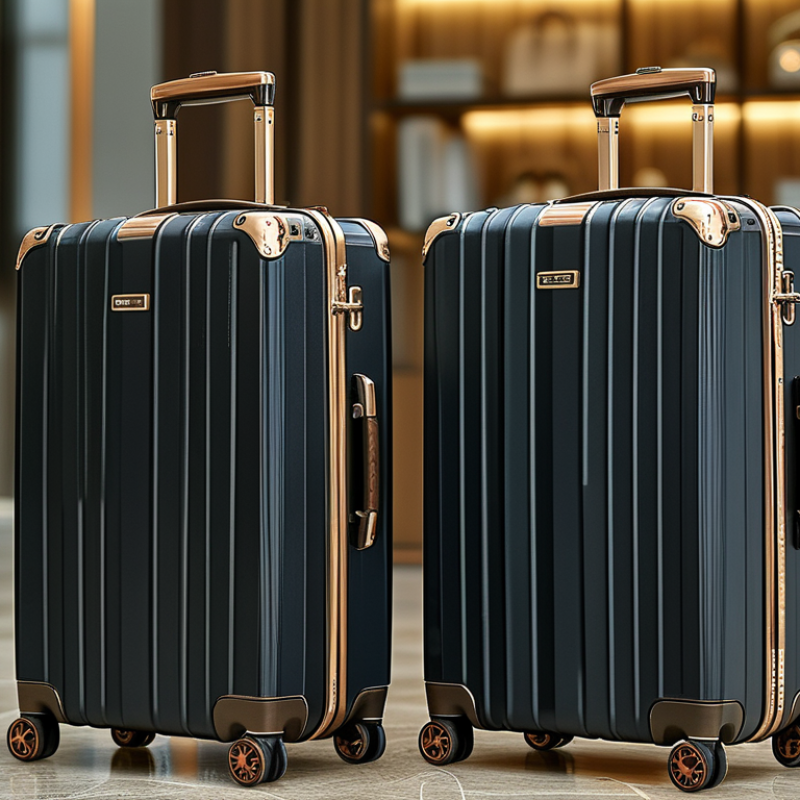
Corporate trolley luggage is purpose-built mobile storage for business travel, exhibitions, site visits, and internal transport. It usually combines a wheeled case, telescopic handle, document sections, and protected compartments for equipment. The design serves more than appearance. It helps employees move samples, contracts, laptops, and presentation materials with less strain.
In practical procurement, the trolley becomes part of a company’s working system. Smooth wheels reduce effort across airport floors and exhibition halls. Reinforced corners and tested zippers help protect contents during repeated handling. A suitable interior also saves time when staff need a charger, folder, or device quickly.
Details matter. A procurement team should check wheel-cycle tests, handle-load tests, stitching quality, and repair support before placing an order.
Corporate luggage can also support consistent presentation through neutral colors, measured customization, and organized packing layouts. However, a larger case is not always better. Extra capacity may encourage overpacking and increase carrying weight.
This definition is incomplete without the user’s routine. A sales team may need fast-access compartments, while technicians may value shock protection and washable lining. Buyers comparing manufacturers in China should request material specifications, sample inspections, production records, and clear quality controls. No factory is perfect. Even a strong sample can hide weaknesses in long-term use, so field feedback should influence the next order.
Corporate trolley luggage from China is often selected for flexible production and competitive bulk pricing. Leading manufacturers stand out through practical engineering, not attractive catalogs alone. They typically offer reinforced polycarbonate shells, smooth multi-directional wheels, and telescopic handles with controlled locking positions. These details matter during airport transfers, hotel corridors, and daily business travel.
Reliable manufacturers maintain clear quality-control steps from material inspection to final packing. A serious factory should provide sample testing, production records, and inspection reports before shipment. Look for even stitching, aligned zipper tracks, protected corners, and handles that resist side pressure. Wheel testing is especially important. A suitcase may roll well on a showroom floor but behave differently on rough pavement. Ask for test videos or third-party verification when possible.
Customization is another key feature for corporate buyers. Manufacturers may adjust colors, lining layouts, logos, compartments, and packaging quantities. They should also explain minimum order quantities and delivery schedules in writing. No factory is flawless. Small issues can appear in early samples, especially with wheel noise or handle looseness. That is why a careful buyer should record defects, request revisions, and approve a pre-production sample. Transparent communication builds greater reliability than optimistic promises. Suppliers that welcome inspection usually show stronger professional discipline.
| Capability Dimension | Common Specification or Range | Business Value | Recommended Verification Point |
|---|---|---|---|
| Shell Materials | Polycarbonate, ABS, ABS/polycarbonate blends, aluminum, or soft textile constructions | Allows buyers to balance impact resistance, weight, appearance, and target price | Confirm material composition, thickness, recycled content, and sample performance |
| Commercial Size Range | Approximately 18–20 in cabin sizes, 24–26 in medium sizes, and 28–32 in large sizes | Supports different travel segments and corporate gift programs | Check external dimensions, wheel clearance, handle height, and regional airline requirements |
| Wheel System | Four double or single spinner wheels, commonly using polyurethane or rubber-like rolling surfaces | Improves maneuverability and reduces pulling effort on smooth floors | Test rolling noise, swivel control, wheel attachment strength, and replacement availability |
| Telescopic Handle | Two- or three-stage aluminum or steel handle systems with an integrated release button | Provides adjustable height and supports repeated handling during business travel | Inspect locking positions, side-to-side movement, corrosion resistance, and cycle-test results |
| Closure Construction | Coil zipper, metal zipper, frame closure, or hybrid closure systems | Influences security perception, water resistance, service life, and product positioning | Evaluate zipper pull strength, opening smoothness, seam quality, and closure alignment |
| Interior Organization | Lining, zippered divider, compression panel, adjustable straps, and accessory pockets | Creates a more practical and premium experience for corporate users | Check lining tear resistance, pocket capacity, stitching density, and cleaning performance |
| Security Features | Integrated combination locks, reinforced zipper pulls, tamper-evident details, and concealed compartments | Adds convenience and helps differentiate corporate travel products | Verify lock operation, reset procedure, component durability, and applicable destination requirements |
| Branding and Customization | Logo printing, laser marking, embossed panels, custom lining, hangtags, packaging, and color matching | Enables promotional campaigns, employee gifts, event merchandise, and private-label programs | Request artwork proofs, color samples, decoration tolerances, and packaging specifications |
| Quality Testing | Impact, drop, handle fatigue, wheel rolling, zipper cycling, load, abrasion, and colorfastness checks | Reduces product returns and supports consistent bulk-order quality | Ask for test methods, sample sizes, acceptance criteria, and inspection records based on ISO 22248 where applicable |
| Production Flexibility | Stock designs may support lower quantities; customized molds and materials generally require higher quantities | Helps match product development plans with budget and launch volume | Confirm minimum order quantity, sample lead time, tooling ownership, and change-control procedures |
| Compliance Documentation | Material declarations, restricted-substance documentation, packaging information, and destination-market records | Supports responsible sourcing and smoother import or retailer onboarding | Request current documents aligned with the destination market and product composition |
| After-Sales Support | Spare wheels, handles, locks, zipper pulls, repair guidance, and defined warranty terms | Extends product service life and improves customer satisfaction | Clarify warranty coverage, response times, spare-part pricing, and replacement procedures |
Note: Specifications are representative industry ranges and should be confirmed against the final product sample, destination-market requirements, and purchase agreement.
Corporate trolley luggage depends on material discipline, not attractive samples alone. Polycarbonate shells offer balanced impact resistance and manageable weight. ABS can reduce costs, but it may crack under repeated cold-weather stress. Aluminum frames create a premium structure, although dents remain visible after hard handling. Interior linings should resist tearing, staining, and frequent cleaning. Recycled polyester is useful when suppliers verify its composition and durability.
Design must follow real business travel routines. A stable telescopic handle should move smoothly without excessive side play. Quiet spinner wheels matter in airports and narrow hotel corridors. Reinforced corners protect luggage during conveyor transfers. Padded laptop sections need firm stitching and practical access. However, more pockets can create unnecessary weight. Simpler designs often serve corporate users better. That deserves reconsideration.
Quality standards require measurable testing. Reliable factories commonly use incoming material checks and production inspections. Drop tests can reveal shell weakness around wheels and corners. Handle systems need repeated extension and load testing. Zippers, wheel bearings, and locks should receive separate inspections. Batch sampling, documented tolerances, and traceable inspection records improve consistency. ISO-based quality systems may support control, but certificates alone prove little. Factory audits, pre-shipment inspections, and sample comparisons provide stronger evidence. Some perfect prototypes fail during mass production. That gap must be monitored.
A reliable supplier usually begins with a detailed brief. Buyers can select shell materials, dimensions, wheel systems, handle colors, lining fabrics, and interior layouts. Logo application may include engraving, metal badges, printing, or stitched labels. Each method creates a different visual effect and cost. A physical sample is essential before mass production. It reveals issues that drawings may miss.
Branding should remain practical. A logo that is too large may look unprofessional. Small details, such as zipper pulls and luggage tags, can create stronger recognition. Manufacturers should also confirm color references, packaging requirements, carton marks, and delivery schedules in writing. Quality checks can cover wheel movement, handle strength, zipper performance, shell impact resistance, and stitching accuracy. Documentation supports dependable purchasing decisions.
Customization is not always better. Too many features can increase weight and reduce usability. A first sample may also need revision. That is normal. Experienced buyers often test the trolley with real travel conditions before approving production. They review loading space, rolling comfort, noise, and surface wear. Clear communication helps prevent expensive changes later. For corporate orders, consistent color, stable quality, and repeatable specifications matter more than a flashy prototype.
Selecting a Chinese corporate trolley luggage manufacturer requires evidence, not polished catalog images. Grand View Research valued the global luggage market at approximately USD 36.23 billion in 2023, with projected growth through 2030. UN Tourism also reported about 1.4 billion international tourist arrivals in 2024. These figures suggest strong demand, but they do not prove factory capability.
Request a production audit, business license, quality certifications, and recent export records. Confirm whether the factory controls cutting, stitching, wheel assembly, and final inspection internally. Ask for samples built with your actual dimensions, logo method, fabric, and packing requirements. Test wheel rolling on uneven flooring, handle wobble, zipper strength, corner impact, and loaded weight. Inspect the hinges.
A reliable supplier should provide measurable tolerances, material specifications, inspection checkpoints, and corrective-action records. Compare sample consistency across several units, not just one attractive case. Check carton compression and moisture protection for long-distance shipping. A factory may quote cheaply by reducing lining density or wheel quality; request a cost breakdown before negotiating. My own evaluation mistake would be trusting a responsive salesperson too quickly. Communication matters, but documented process matters more. An independent pre-shipment inspection can verify quantity and defects against agreed standards. Leave room for improvement. Even a strong first sample may hide production variation.
This 100-point procurement framework prioritizes product quality, compliance, and factory capability before commercial factors. Buyers should verify each category through sample testing, audit records, certifications, production documentation, and written service terms. The framework is intended for comparing manufacturers without relying on company or brand names.