
7 Best Custom Touch Screen Gloves Suppliers?

Choosing among the 7 Best Custom Touch Screen Gloves Suppliers requires more than comparing catalog photos. A glove may look premium yet fail after repeated washing, cold exposure, or daily touchscreen use. Buyers should inspect conductive yarn placement, fingertip response, palm grip, insulation, stitching, and customization options. Small details matter. A loose seam can ruin an otherwise excellent product.

Dr. Juan Hinestroza, a recognized textile scientist at Cornell University, has said, “Textiles are no longer passive materials; they can become active interfaces.” This idea fits Custom Touch Screen Gloves closely. Their value depends on how fabric, conductive fibers, comfort, and digital usability work together. Experienced suppliers should provide prototypes, material specifications, color references, size charts, and clear minimum order quantities. They should also explain whether performance changes after washing. Vague promises deserve caution.

This guide examines suppliers through a practical purchasing lens. It considers manufacturing experience, response accuracy, customization depth, quality control, production capacity, and communication reliability. Product testing should include cold-weather swipes, repeated bending, and screen use with dry fingers. No supplier is perfect. Even a strong factory may have slower sampling or higher minimum quantities. That trade-off deserves honest attention. Certifications and ethical production practices should also be verified rather than assumed. The best choice is not always the cheapest quotation. It is the supplier that can consistently turn a detailed glove concept into a dependable, wearable product.
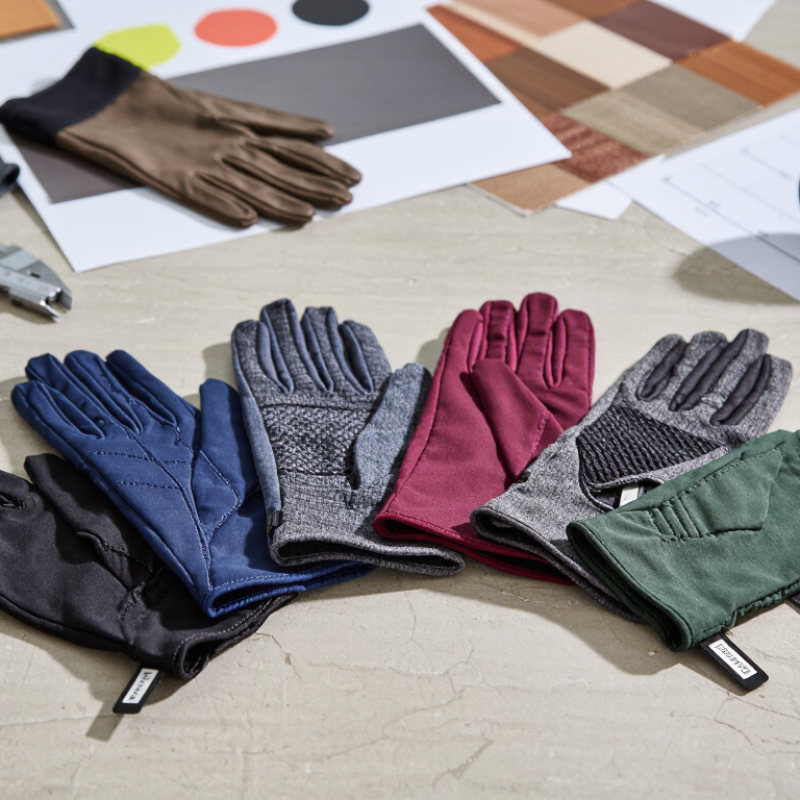
7 Best Custom Touch Screen Gloves Suppliers?

What Are Custom Touch Screen Gloves?

What Are Custom Touch Screen Gloves?

Custom touch screen gloves are handwear designed with conductive yarn, coated fingertips, or embedded fabric panels. These materials transfer a small electrical signal from the wearer’s finger to a capacitive screen. Unlike ordinary gloves, they can be adjusted for insulation, grip, color, sizing, logos, and workplace use.

The design is practical but not simple. A supplier may place conductive fibers on the thumb and index finger, then test sensitivity through several screen protectors. Stitch density, moisture, and fabric thickness can change performance. A conductive patch may work in a showroom and fail in freezing rain. That matters.

Market research supports growing interest in functional textiles. Fortune Business Insights valued the global smart textiles market at about USD 3.3 billion in 2023 and projected continued growth through 2032. This figure does not represent touchscreen gloves alone. It shows wider demand for textiles that combine comfort with technology.

Reliable customization requires documented testing. Ask for wash-cycle results, touchscreen response tests, material specifications, and sample approval before bulk production. EN 388 testing can also help evaluate mechanical risks for suitable work applications. However, touchscreen performance is often tested less rigorously than abrasion resistance. That gap deserves attention. In real use, a glove must feel warm, flexible, and responsive after hours of movement, not only during a short demonstration.

7 Best Custom Touch Screen Gloves Suppliers? What Are Custom Touch Screen Gloves?

Custom touch screen gloves are designed with a conductive path that allows a capacitive screen to detect touch through selected glove areas. The chart shows whether each common glove construction typically provides that path when no additional brand-specific information is considered.

Technical indicator: 1 means the construction is designed to transmit a capacitive touch signal; 0 means an insulating construction normally does not. Actual performance depends on conductive material placement, screen sensitivity, fit, and wash durability.

How to Evaluate Custom Touch Screen Glove Suppliers

How to Evaluate Custom Touch Screen Glove Suppliers

A capable supplier should prove performance, not merely show attractive samples. Grand View Research estimates that the global smart textiles market may reach USD 15.7 billion by 2030. This growth increases supplier choices, but also increases evaluation risks. Request samples made with your actual yarn, coating, and touchscreen requirements. Test them on several devices, including phones with screen protectors. Check accuracy with dry and slightly damp fingers. Real use is messier than a factory demo.

Review the supplier’s quality system and test records. ISO 21420 addresses general glove safety, while EN 388 evaluates mechanical protection. Neither standard alone confirms reliable touchscreen control. Ask for test conditions, sample sizes, failure rates, and retesting procedures. A serious supplier should explain conductivity changes after washing, stretching, and abrasion. Do not accept “works on all screens” without evidence. That claim is too broad.

Production capability matters as much as laboratory results. Confirm minimum order quantities, prototype timing, material traceability, and inspection checkpoints. The International Trade Centre reports that technical requirements and conformity assessment can significantly affect international sourcing decisions. Ask whether the supplier can maintain finger sensitivity across different sizes. Review one pilot batch before approving mass production. My own evaluation would include repeated wear testing, but I would not treat one successful sample as proof. Supplier communication can also reveal weaknesses. Slow answers, missing data, or vague tolerances deserve careful reconsideration.

7 Best Custom Touch Screen Gloves Suppliers? - How to Evaluate Custom Touch Screen Glove Suppliers

Anonymous supplier evaluation benchmark based on commonly required OEM/ODM capabilities, product specifications, and purchasing considerations.

Indicative comparison table — specifications, MOQs, and lead times should be confirmed with each supplier through samples and written quotations.
Rank Anonymous Supplier Profile Best Fit Common Customization Options Typical Materials Indicative MOQ Sample Lead Time Key Evaluation Evidence Indicative Score
01 Full-Service OEM/ODM Manufacturer Large retail programs and private-label collections Pattern, cuff, palm coating, logo, packaging, color, size range Polyester, nylon, acrylic, spandex, conductive yarn, PU coating 500–1,000 pairs 7–15 working days Pre-production sample, material declaration, AQL inspection plan, repeat-wash test 9.2/10
02 Technical Workwear Glove Specialist Industrial, warehouse, logistics, and outdoor users Grip coating, reinforced thumb, reflective details, cuff design, touchscreen zones Nylon or polyester knit, nitrile or PU palm, conductive fibers 1,000–3,000 pairs 10–20 working days Abrasion testing, grip assessment, seam strength, touchscreen operation with dry and damp fingers 9.0/10
03 Winter and Thermal Accessory Manufacturer Cold-weather retail, commuting, skiing, and outdoor activities Thermal lining, waterproof membrane, wrist strap, insulation weight, printed artwork Polyester, nylon, fleece, microfiber, synthetic insulation, conductive fabric 1,000–2,000 pairs 12–25 working days Thermal performance data, water-resistance test, seam-tape inspection, touchscreen test below room temperature 8.8/10
04 Sustainable Textile Glove Supplier Eco-conscious brands and sustainability-led campaigns Recycled yarn, organic-fiber blend, low-impact dyeing, recycled packaging, logo embroidery Recycled polyester, organic cotton, recycled nylon, conductive yarn 500–2,000 pairs 12–22 working days Fiber-content certificates, restricted-substance testing, recycled-content documentation, wash-colorfastness test 8.6/10
05 Promotional and Event Merchandise Producer Corporate gifts, events, uniforms, and short-term campaigns Low-complexity logo, custom color, hangtag, polybag, size assortment Acrylic, polyester, cotton blend, conductive thread 100–500 pairs 5–12 working days Artwork approval, color proof, packaging checklist, random quantity and appearance inspection 8.3/10
06 Small-Batch Design and Sampling Studio Startups, product testing, and limited-edition collections Custom pattern, mixed materials, prototype revisions, small logo placement, packaging mock-up Knitted synthetics, cotton blends, microfiber, conductive knit panels 50–300 pairs 5–15 working days Fit sample, revision record, dimensional tolerance sheet, touchscreen usability check on target devices 8.1/10
07 Cost-Focused Volume Manufacturer High-volume promotional and value-market programs Standard patterns, basic logo, color matching, size grading, carton labeling Polyester, acrylic, nylon, conductive yarn, basic PU coating 3,000–10,000 pairs 10–18 working days Pre-shipment inspection, carton drop test, size ratio check, defect-rate report, production capacity evidence 7.9/10
Touchscreen Test
Test tapping, swiping, typing, and multi-touch on the customer’s target devices.
Quality Control
Request an approved sample, tolerance sheet, inspection standard, and defect classification.
Compliance Review
Verify fiber content, restricted substances, labeling, packaging, and destination-market requirements.
Commercial Check
Compare landed cost, MOQ, tooling fees, payment terms, delivery schedule, and replacement policy.

Scoring reference: customization capability 25%, touchscreen performance 20%, quality assurance 20%, material and compliance documentation 15%, MOQ and lead time 10%, communication and commercial terms 10%.

Profiles of the 7 Best Custom Touch Screen Glove Suppliers

Profiles of the 7 Best Custom Touch Screen Glove Suppliers

Supplier One focuses on corporate orders and offers logo printing, color matching, and standard sizes.

Supplier Two specializes in winter cycling gloves, using conductive yarn on the thumb and index finger.

Supplier Three serves outdoor retailers with insulated, water-resistant designs and small sampling runs.

Supplier Four supports fashion labels through cut-and-sew production, custom cuffs, and recycled polyester options.

Supplier Five handles promotional campaigns, offering quick sampling but fewer technical fabrics.

Supplier Six develops work gloves with reinforced palms and touchscreen compatibility.

Supplier Seven provides premium private-label production, including packaging, fit testing, and material traceability.

The selection deserves evidence, not attractive photographs alone.

Grand View Research valued the global smart textiles market at about 5.55 billion dollars in 2023, with strong projected growth through 2030. That trend increases supplier competition, but quality still varies. Textile Exchange reported polyester remained the largest fiber category in 2023. Ask each supplier for recycled-content certificates and fiber composition records. For cold-weather products, request testing against EN 511 where relevant. Touch performance can decline after repeated washing. That detail is often overlooked.

Tips:

Request three physical samples. Test swipes with wet and dry fingers. Check stitching around the conductive panels. Compare shrinkage after five washes. Ask for an AQL inspection plan, production lead time, and replacement terms.

One honest warning: “waterproof” may describe the fabric, not the complete glove. A supplier that admits this limitation may deserve more trust.

Comparing Quality, Customization, Pricing, and Lead Times

Choosing among the 7 best custom touch screen gloves suppliers requires more than comparing catalog photos. Quality begins with the fabric, touchscreen coating, stitching, and wrist finish. A reliable supplier should explain fiber composition, abrasion resistance, and touchscreen performance after repeated washing. Test samples in cold conditions, because some fingertips respond well indoors but fail near 5°C. Check whether seams rub the fingers during long use. Small details matter.

Customization can include colors, logo placement, grip patterns, cuff labels, and packaging. Ask for a physical sample before approving bulk production. The sample should match the final fabric and printing method, not a cheaper substitute. Pricing depends on material, order volume, customization, packaging, and mold or setup fees. Request a complete quotation. Low unit pricing can hide expensive revisions or shipping charges. This is where comparisons often become less clear.

Tips: Ask for a sample timeline, production timeline, and shipping estimate separately. Confirm the acceptable defect rate in writing. Request test reports when performance claims affect workplace safety. Compare samples under the same conditions. Keep notes. It is easy to remember a supplier’s promise incorrectly. A practical comparison should also examine communication speed and correction policies. A supplier that admits limitations may be more dependable than one promising perfect performance. Lead times can change during peak seasons, so add a reasonable buffer. My own evaluation would not rely on price alone; that approach sounds efficient, but it can produce disappointing gloves.

How to Choose the Right Supplier for Your Brand

Choosing among custom touch screen gloves suppliers requires more than comparing prices. Your supplier must understand your product, customers, and daily use conditions. Ask for material details, conductive yarn specifications, and recent quality records. A reliable supplier should explain how touch sensitivity is tested, not simply promise “perfect performance.”

Request samples in your intended colors and sizes. Test them with several phones, including devices with screen protectors. Check stitching around the fingertips, palm grip, insulation, and comfort after thirty minutes. It should work consistently. Review production capacity, minimum order quantities, sampling fees, and delivery schedules. Factory photos are useful, but an independent audit or live inspection provides stronger evidence. Check documentation carefully.

Tips: Create a small testing checklist before contacting suppliers. Include touch accuracy, wash resistance, warmth, packaging, and defect tolerance. Ask how rejected pairs are recorded and corrected. A supplier that shares clear answers usually manages problems better. Still, do not trust samples alone. A beautiful prototype can hide uneven bulk production. This is where many buyers misjudge risk. Request a pre-production sample and written approval process. Leave room for revision; your first specification may be too ambitious or unclear. Regular communication, realistic timelines, and traceable inspections can protect your brand’s reputation.