
Global business travel is changing, and corporate luggage buyers are becoming more selective. In 2026, Corporate Trolley Luggages must support mobility, durability, security, and professional presentation. A polished suitcase is no longer enough. Buyers now examine wheel systems, handle strength, compartment design, repair access, and branding flexibility.
Bob Plath, the inventor of the modern Rollaboard suitcase, once described his design goal simply: “I wanted to make a suitcase that would roll down the aisle.” That practical idea still matters. A reliable trolley should move smoothly through airport terminals, hotel corridors, and crowded exhibition halls. Small wheels can struggle on uneven pavements. Weak handles can fail during repeated business trips.
This guide reviews the leading corporate trolley luggage types for global buyers. It considers hard-shell cases, soft-sided models, expandable designs, laptop compartments, and customized promotional luggage. Each type offers different value. None is perfect. Some lightweight cases sacrifice impact resistance. Some reinforced models become uncomfortable to lift. That trade-off deserves attention.
Real purchasing decisions also involve more than appearance. Buyers should check sample quality, zipper performance, wheel noise, warranty terms, and production consistency. A logo may look impressive on a screen but appear uneven on the finished case. Careful testing is essential.
The best choice depends on travel frequency, destination conditions, employee needs, and budget discipline. One universal model rarely works. Corporate luggage should serve real journeys, not just catalog photography. That is where thoughtful sourcing begins.
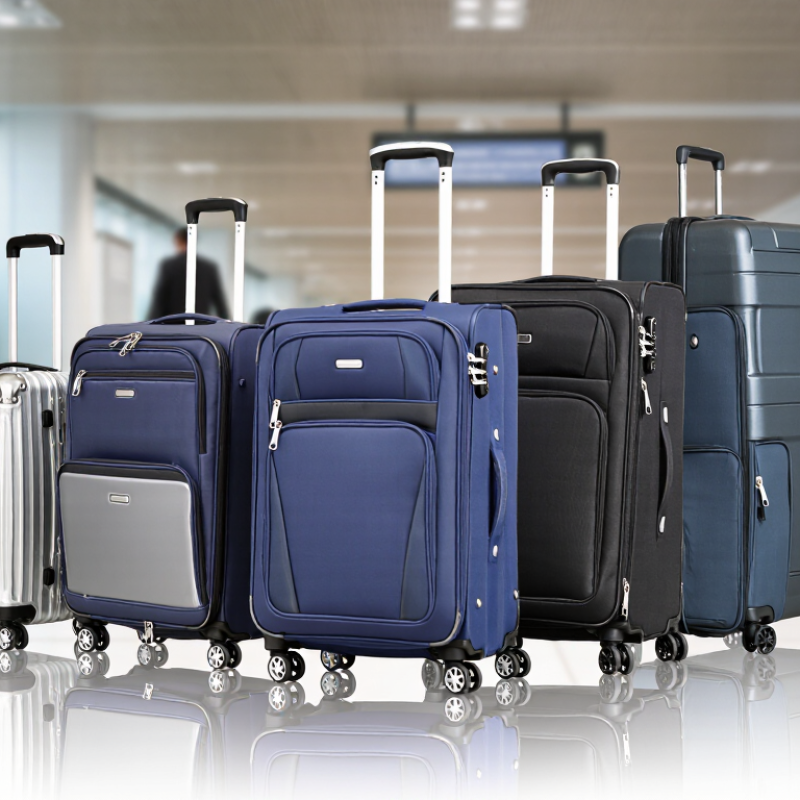
Corporate trolley luggage is wheeled business luggage designed for frequent professional travel. It usually combines a reinforced shell, telescopic handle, organized compartments, and secure closures. Unlike ordinary suitcases, it often supports documents, laptops, samples, uniforms, or compact equipment. Global buyers commonly select cabin-size cases, expandable carry-ons, garment compartments, and larger checked models for different travel routines.
Its business applications are practical and varied. Sales teams can carry presentation materials and personal essentials between meetings. Technicians may use divided compartments for tools, manuals, and protective accessories. At trade events, a durable trolley can transport brochures, sample products, and clothing without excessive hand carrying. Procurement teams should assess wheel performance, handle stability, fabric or shell durability, and repair access. A low price may look attractive, but repeated replacement can increase operating costs. I have seen this overlooked.
Tips: Match the luggage size to airline policies in target markets. Check empty weight before ordering large quantities. Test the wheels on uneven flooring. Ask suppliers for load, zipper, and handle testing records. Sample inspection matters. A small production flaw can affect hundreds of units. Also review packaging, spare parts, and warranty procedures. No design is perfect; buyers should record user feedback after real business trips and adjust future orders.
Corporate travel is expanding again. WTTC’s 2024 Economic Impact Research reported that global business travel spending reached about US$1.5 trillion in 2023. This growth increases demand for practical trolley luggage. Grand View Research valued the global luggage market at US$22.67 billion in 2023. It also projects a 7.1% CAGR from 2024 to 2030.
The two-wheel business trolley remains useful on uneven pavements. Its recessed wheels protect space for documents and laptops.
Four-wheel spinner luggage suits airports and smooth office floors. It moves easily beside the traveler.
Expandable cabin trolleys offer extra capacity for short business trips.
Garment trolleys protect jackets, shirts, and presentation clothes.
Underseat trolleys work well for quick flights and limited storage.
Heavy-duty aluminum cases provide stronger shell protection, but they may increase weight. That trade-off deserves careful review.
Tips:
Match the luggage type to travel conditions. Measure cabin limits before bulk purchasing. Check wheel noise, handle stability, zipper quality, and laptop padding. Ask for samples before approving a large order.
A polished exterior can hide weak stitching. It happens more often than buyers expect.
Sustainability also needs evidence. Request recycled-content data, repair policies, and material certifications.
The cheapest trolley may create higher replacement costs. Yet premium features are not always necessary for every employee.
Corporate trolley luggage in 2026 should balance lightness with repeated handling. Polycarbonate shells resist impact and moisture, while aluminum frames offer stronger edge protection. Recycled polyester remains practical for soft-sided models, especially when buyers need expandable compartments.
However, lighter is not always better. Thin panels may flex around laptops, documents, and sample equipment.
Structure deserves close testing. Look for reinforced corners, double-stitched seams, and a stable telescopic handle. A recessed handle protects the frame during loading. Internal compression straps prevent contents from shifting. This detail matters during rapid transfers.
SITA’s 2024 Baggage IT Insights reported 6.9 mishandled bags per 1,000 passengers in 2023, representing about 36.1 million bags. Corporate cases should therefore tolerate rough movement and quick recovery.
Mobility is equally important. Four-wheel spinner systems reduce wrist strain across terminals, but small wheels can struggle on uneven pavement. Larger wheels with sealed bearings usually roll more smoothly. Replaceable wheel housings can extend service life, though they add weight and cost.
Buyers should test turning radius, handle wobble, and wheel noise with a loaded case. I would not judge mobility from an empty sample. That test is misleading.
Verify cabin dimensions for each route, because international limits still vary by carrier and aircraft.
2026 Top Corporate Trolley Luggage Types for Global Buyers
Capacity should match the workday, not just the product photo. A compact two-wheel trolley suits short business trips and narrow train aisles. Four-wheel models offer smoother movement through airports, although their wheels can face greater impact. A 20–24 inch case often balances clothing, documents, and a laptop sleeve. Internal compression panels reduce shifting, but they may consume useful space. Measure the laptop compartment carefully. Details matter.
Security features should protect contents without creating travel complications. Buyers can request reinforced corners, tamper-evident zippers, and durable telescopic handles. A built-in combination lock is practical when its instructions are clear and resettable. Security should not mean excessive weight. Independent sampling, wheel-drop tests, handle-cycle tests, and zipper inspections provide stronger evidence than attractive specifications. Some designs still fail after repeated curb impacts. That weakness deserves honest review.
Branding works best when it remains useful and restrained. A heat-stamped logo, woven label, or discreet metal badge can support corporate identity without reducing luggage durability. Custom colors should match available material finishes, not only digital screens. Buyers may also specify lining patterns, pull-handle colors, accessory pouches, and serial-number areas for internal tracking. Production samples are essential because printed colors and molded textures can vary. A thoughtful supplier records dimensions, materials, test results, and approved artwork before mass production. Minor changes are easy early, but expensive later.
Practical comparison of common corporate trolley luggage formats for business travel, employee programs, conferences, and promotional distribution.
| Luggage Type | Typical Capacity | Typical Dimensions | Best Corporate Use | Security Features | Branding Areas | Customization Options | Mobility & Construction | Indicative Order Position |
|---|---|---|---|---|---|---|---|---|
| Underseat Business Trolley | 18–25 L | Approx. 40 × 30 × 20 cm | Short business trips, commuter gifts, executive meetings | Lockable zippers; optional combination lock; concealed document pocket | Front panel, luggage tag, pull handle, zipper pullers | Color matching, woven label, debossing, embroidery, custom lining | Two-wheel or compact four-wheel design; polyester or recycled fabric | Suitable for pilot orders and employee welcome kits |
| Cabin Spinner Trolley | 32–42 L | Approx. 55 × 35 × 20–23 cm | Air travel, conferences, incentive programs, sales teams | Combination lock; lockable zippers; split-compartment organization | Hard shell, front badge, handle, interior divider | Printed shell, laser engraving, metal logo plate, custom packing | Four 360-degree spinner wheels; ABS, polycarbonate, or hybrid shell | Common standard for scalable corporate programs |
| Expandable Cabin Trolley | 38–50 L | Approx. 55 × 36 × 23–28 cm when expanded | Multi-day travel, training events, trade-show attendance | Lockable expansion zipper; combination lock; compression straps | Front shell, side panel, luggage tag, internal divider | Custom expansion trim, lining, zipper color, logo application | Four-wheel spinner system; rigid shell with expandable gusset | Useful when packing flexibility is more important than minimum size |
| Medium Check-In Trolley | 60–80 L | Approx. 65–70 × 42–46 × 26–30 cm | Longer assignments, relocation support, premium employee gifts | Combination lock; reinforced corners; internal compression system | Shell badge, side panel, luggage tag, interior label | Shell color, wheel housing, interior fabric, custom accessories | Four spinner wheels; lightweight polycarbonate or polypropylene shell | Best for premium kits requiring balanced capacity and portability |
| Large Check-In Trolley | 90–120 L | Approx. 75–82 × 48–52 × 30–34 cm | International assignments, family travel benefits, relocation programs | Combination lock; reinforced frame; durable corner protection | Large shell area, side badge, handle, removable tag | Custom molded badge, shell finish, wheel color, packing configuration | Four or eight-wheel spinner layout; rigid impact-resistant shell | Prioritize wheel durability and handling testing for heavy loads |
| Garment Trolley | 45–65 L | Approx. 55–62 × 38–45 × 23–28 cm | Executive travel, formal events, client-facing teams | Lockable zippers; garment straps; separate shoe and accessory pockets | Front cover, metal plate, luggage tag, internal garment panel | Custom lining, hanger system, trim color, monogram panel | Two-wheel or four-wheel construction; fabric or hybrid format | Higher perceived value for executive and hospitality programs |
| Laptop Trolley | 25–40 L | Approx. 40–45 × 35–40 × 20–25 cm | Consultants, mobile sales teams, business commuters | Padded laptop compartment; lockable main zipper; RFID-blocking pocket optional | Front pocket, luggage tag, handle, interior computer sleeve | Laptop compartment size, fabric color, woven label, metal puller | Compact two-wheel trolley with telescopic handle; nylon or polyester body | Confirm device dimensions and padding requirements before production |
| Recycled-Fabric Soft Trolley | 35–75 L | Cabin to medium check-in formats | Sustainability-focused procurement and employee reward programs | Lockable zippers; hidden pockets; optional combination lock | Fabric front panel, woven label, luggage tag, zipper pullers | Recycled-fabric specification, recycled-content label, color matching, embroidery | Two or four wheels; soft-sided recycled polyester with structured frame | Request material documentation and verify recycled-content claims |
| Hybrid Hard-Shell Trolley | 45–90 L | Cabin to large check-in formats | Premium global programs needing structure and flexible storage | Combination lock; rigid protective shell; lockable expansion zipper | Front hard panel, fabric side panel, badge, interior divider | Shell and fabric color combinations, molded badge, lining, trim, hardware | Four spinner wheels; rigid shell combined with expandable fabric sections | A versatile option when protection and organization are equally important |
Global buyers need purchasing standards that survive daily business travel. Corporate trolley luggage should balance durability, useful capacity, controlled weight, and professional appearance. A sample may look excellent, yet fail after repeated airport handling.
Specify dimensions, empty weight, shell material, wheel structure, handle height, and interior layout. Request test records for wheel rolling, handle cycles, zipper movement, drop resistance, and loaded compression. Each test should show methods, sample numbers, dates, and responsible laboratories. Vague claims are not enough. They create expensive delays.
Supplier selection requires more than a low quotation. Review factory capacity, quality-control procedures, material traceability, production lead times, and replacement-part support. Inspect pre-production samples and approve a sealed reference sample. A third-party factory inspection can check stitching, alignment, odor, surface marks, and carton protection. Ask whether the supplier can maintain identical color and hardware across repeated orders. This is often difficult. Buyers should also verify applicable product, chemical, labeling, packaging, and recycling requirements for each destination market. Requirements differ by region, and one universal file may be incomplete. During trial orders, measure actual defect rates, packing efficiency, delivery accuracy, and customer handling feedback. Keep written records. A supplier who responds clearly to failures is often more reliable than one offering the lowest price.